Teens, Algorithms, and a Seat at the Table: How Young People Want to Fix Social Media, Megan Nyhan et al
Megan Nyhan et al
Teens, Algorithms, and a Seat at the Table: How Young People Want to Fix Social Media
Authors: Megan Nyhan, Dr Kevin Doherty, Daniel Snow, Kayley Moylan, Rhys Jacka, Dr Izzy Fox, Dr Barry O’Sullivan, Dr Josephine Griffith, Dr Susan Leavy
Social media is deeply embedded in many teenagers’ daily lives, serving as a space for communication, entertainment, learning, and self-expression. However, the content appearing in their feeds is not simply a chronological reflection of what their friends post. Instead, it is largely selected by recommendation algorithms designed to maximize engagement and boost user retention. Given the growing influence of these algorithmic systems on teen online experiences, it is essential to understand how teenagers themselves perceive and navigate them. This study engaged Irish teens, aged 15–18, to unpack how these systems work, how they help and harm teens, and how they believe platforms should change to truly serve young people’s needs. It offers a detailed account that positions teens not as passive “vulnerable users,” but as active experts in their own online experiences.
How the Study Worked
UCD researchers ran five, two‑hour focus groups in Irish secondary schools with 87 teens (42 girls, 45 boys), using classroom‑style, think-pair-share discussions.
| School Typology | No. of Participants | No. of Groups |
| Mixed-gender secondary school | 13 | 3 groups |
| Mixed-gender, DEIS (Delivering Equality of Opportunity in Schools) community school | 20 | 5 groups |
| Mixed-gender, Irish Language | 13 | 3 groups |
| All-girls’ school | 22 | 3 groups |
| All boys’ school | 19 | 4 groups |
Table 1: School Typology, Gender Make-up and Number of Participants Breakdown
They used short, relatable scenarios (like opening TikTok “just for one video” and losing an hour) and videos to spark conversation about algorithms, harmful content, and possible design fixes. The sessions were designed as participatory design workshops: teens were treated as co‑designers of safer, fairer platforms, not just research subjects.
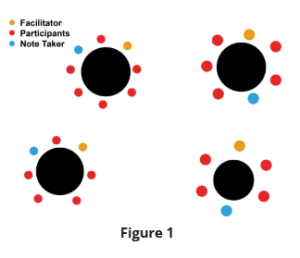
Figure 1: A diagram of a standard focus group session in a school.
Students first reflected individually about each scenario, before discussing in small groups (“think‑pair‑share”), writing their thoughts on color‑coded Post‑it notes while facilitators led discussion and note‑takers recorded key points. These post‑its and facilitator notes formed the main qualitative dataset. For analysis, the first author transcribed all post‑it notes and field notes, removed identifiers, and then carried out reflexive thematic analysis following Braun and Clarke’s guidelines.
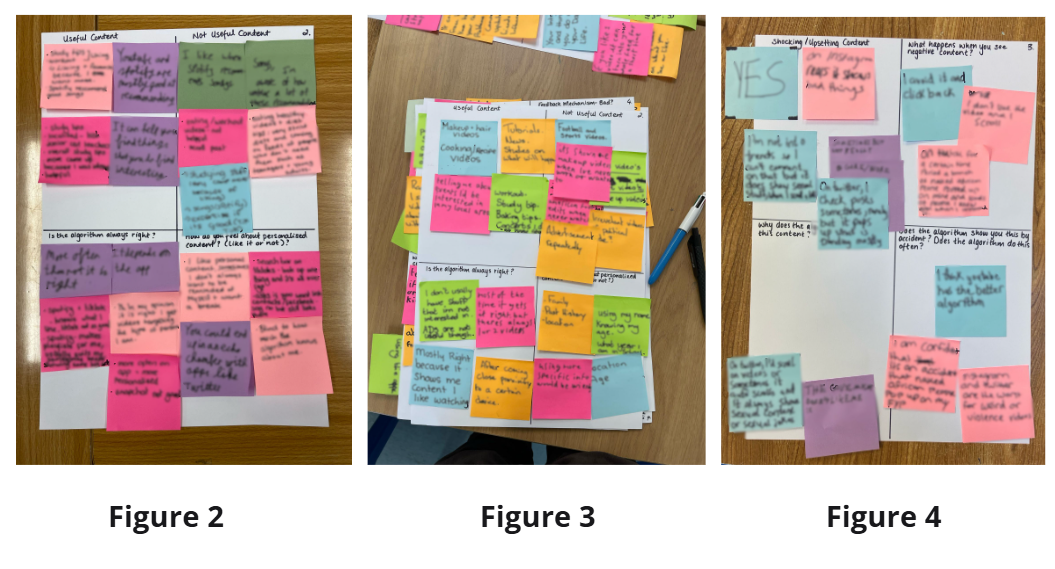
Figure 2 – 4: Data collection during focus groups where we had participants leave post-it notes on A3 paper. The use of post-it notes offered participants autonomy over their responses.
What Teens Know About Algorithms
Teens in this study demonstrated a strong awareness of how recommendation systems operate. Many explained that they actively “train the algorithm” through their likes, clicks, and watch time to shape feeds around their interests. Participants also showed a clear understanding of the underlying business model: the longer users stay engaged, the more advertising revenue platforms and creators generate, while users themselves receive little direct benefit. At the same time, personalised feeds were viewed as both helpful and excessively compelling/ addictive. Because content is so closely tailored to their preferences, many teens said it becomes difficult to stop scrolling, contributing to doomscrolling, lost time, and feelings of guilt afterward. Ultimately, participants described their relationship with recommendation algorithms as a struggle for control. Although many attempted to influence their feeds by deliberately manipulating the system, they often still felt powerless over the content they were shown and reported being drawn into prolonged, and at times compulsive, platform use.
The Hidden Costs: Harmful Content and Emotional Impact
Participants described a progression from seemingly harmless content to increasingly graphic, sexualised, or otherwise disturbing material that they had not actively sought out. For example, some reported that searching for and engaging with fashion content on TikTok would lead to recommendations featuring explicit sexual content. Teens felt that algorithms often interpreted even brief attention as interest, resulting in repeated exposure to similar material and, in some cases, reinforcing echo chambers of violence, hate, or emotionally manipulative content. Girls, in particular, reported receiving unsolicited and predatory messages from older men after posting content online, leaving them feeling vulnerable and exposed. Participants also highlighted the lasting emotional impact of harmful content, with several noting that disturbing posts could remain “in the back of my mind all day“ (Girl, aged 16). As a result, some described intentionally taking breaks from social media to protect their wellbeing and recover emotionally.
What Teens Want Platforms to Change
Despite feeling that algorithms are “scary powerful,” teens are not asking for a social media ban. They want better tools, clearer rules, and a genuine opportunity for young people to have a voice in decisions shaping social media safety.
During the study, participants called for:
- Stronger, privacy‑respecting age safeguards, with content that genuinely matches age ranges, not easily faked birthdays or fake IDs.
- Reporting and ‘not interested’ tools that actually work, that are fast, visible, and easy to use, rather than long surveys that seem to change nothing.
- Content filters and screen‑time controls that are hard to bypass, including “non‑negotiable” (boy, 17) timers and ways to blur or block specific types of content like violence or nudity.
- Genuine participation in governance. This includes youth advisory boards, school‑based sessions, or quick in‑app surveys, but also emphasising proof their input leads to real change, not token listening.
- At the same time, many doubt their power to shift systems that feel “far too big” (boy, 16), worrying they are “just a number in their system” (boy, 16) and that companies will always prioritise engagement over wellbeing.
Why This Matters Now
The EU’s Digital Services Act requires big platforms to consult people affected by their systems, including teens. This study shows not only that teens can play that role, but how: through carefully designed, school‑based, participatory workshops that respect their expertise and protect their wellbeing. In other words, giving teens a seat at the table is not a symbolic gesture. It is a practical route to safer recommender systems that better serve users’ needs – if platforms are willing to really listen.
Bio: Megan Nuhan is an SFI Funded (through D-Real) PhD candidate focusing on Ethical Recommender Systems at University College Dublin. She is also a member of the Insight Research Centre for Data Analytics and has been listed on Ireland’s 30 Under 30. She will be presenting these findings at the ACM Interaction Design and Children (IDC) Conference.
A full copy of this paper is available here.